The AI-Native
Marketing
Organization

Marketing has only ever scaled by adding people. AI is the first way to add capability without adding headcount — but buying AI does not make an organization AI-native. What does is a factory the organization owns: what it knows, how its work gets done, what good looks like, and the agents that run on all three. This is how a marketing team builds one, and why the people already inside it are the ones who will.

Sectional drawing of a factory engine house, with overhead crane, hanging hooks, and chimney.
Part 01
01

The problem

The old scaling law

Hiring and retaining an agency look like different models. Economically they are the same. Both buy capability by the person. Both require every new person to learn the business. Both add handoffs and coordination as they grow, and both lose what people know when those people leave.

Marketers have been trying to escape that equation for decades. In-housing was one attempt, and the instinct was right: own the capability, the data, the relationships and the institutional knowledge instead of renting them. But in-housing still meant hiring. It brought capability inside by bringing headcount inside, so the scaling law remained. More capability still required more people.

What AI changes

For the first time, there is a way to bring capability in-house without bringing equivalent headcount in-house. That is the real promise of AI for marketing — not writing an email faster, not generating fifty headlines, not giving everyone a chatbot. A marketing organization can now add capability without opening a job req. Hire a person and you get one person's output. Teach an agent how a campaign review works and every marketer has it on Monday — and the next correction improves it for all of them at once.

But buying AI does not make an organization AI-native. Giving everyone Claude seats does not make it AI-native. Neither does a Slack channel full of prompts, or buying an “SEO agent,” a “paid media agent” and a “content agent” from three different vendors. Those are tools.

An AI-native marketing organization is something different. It can build, teach, evaluate and manage an AI workforce of its own.

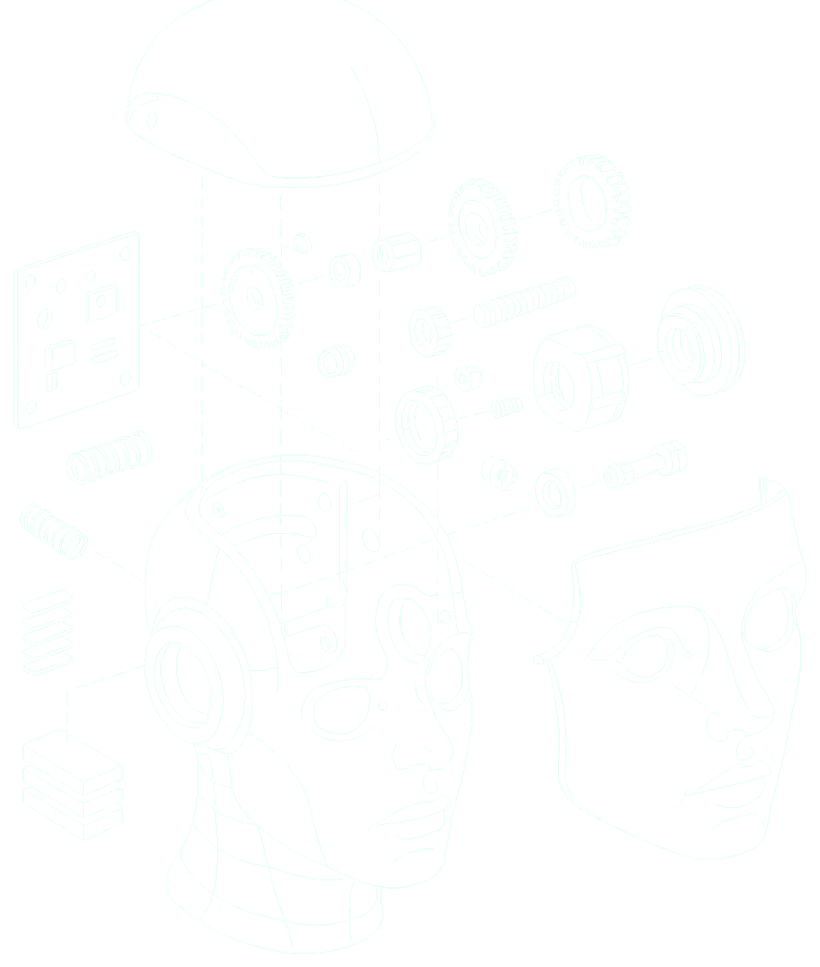
PL.01the head, taken apart

It treats AI like any other member of the team. Nobody hands a new hire a login and judges them on their first answer. Nobody keeps someone on whose work they never review. Nobody expects a good hire to stay useful without ever being told what changed. Every one of those instincts is already in the building, and almost none of them currently get applied to AI.

An AI-native marketing organization is not one that has bought AI tools. It is one that can build, teach, evaluate and manage an AI workforce of its own, adding capability without adding headcount.

Part 02
02

The factory

How a factory works

PL.02flywheel in section

AI-native means humans and machines working well together. That is not a new problem, and marketing does not have to solve it from scratch. There is a century of prior art, and the clearest example is the factory.

A factory is not a building full of machines. It is people and machines on one floor, arranged so that each does what it is good at. Machines take the work that is repetitive and precise, and they never tire of it. People take the work that needs judgment — what to make, what counts as a defect, when to stop the line. A well-run factory has nobody doing a machine's job by hand, and no machine deciding what is worth building. Split that way, the floor turns out more than the people and the machines could turn out separately. That is the entire reason the arrangement exists.

The marketing version is the same split. Humans bring taste, judgment, creativity, relationships and an understanding of the business. Agents bring speed, scale, memory, synthesis and the ability to work continuously.

The four inputs

That factory needs four things. An embedded team can help build them, but the company's knowledge, process and judgment have to come from the people inside it. Each input already has a name on a factory floor.

The four inputs
01The master drawing
Brain
What is true hereWho the customers are. Which numbers the team trusts. How the funnel is defined. What was tried last quarter. Everything a new hire would need months to learn.
02The work instructions at one station
Skills
How this job gets done hereHow a campaign gets analyzed, a brief built, a funnel problem diagnosed, creative reviewed. Which steps to follow, which inputs matter, and what to do when one is missing.
03The gauge on the bench
Evals
What good looks like hereWhat an agent has to get right, and what it should refuse to answer. When something fails, whether the cause was missing knowledge, bad retrieval, bad reasoning or a bad process.
04The trial run
Tests
Whether a change made it betterShould this skill carry the competitor context? Does the agent do better with the full brief or a summary? Evals say whether the work is good; tests say whether a change improved it.

The line

A machine on a factory floor does not assist a worker while the worker does the job. It does the job. The work moves down the line, and a person inspects what comes off it — checking quality, catching defects and deciding what needs to change.

That is the higher-leverage arrangement AI makes possible in marketing too. A marketer should not spend the day working step by step beside an agent. They should be able to hand work to many agents, let them execute it, and spend their own time where human judgment matters: reviewing what comes back, deciding what is good, and directing what happens next.

The marketer moves from producing every piece of work to directing a system that produces work.

And inspection does more than catch defects. When a human corrects the output, that correction can go back into the brain, the skill or the standard that produced it. The next run gets better, and the correction stays corrected.

A correction trapped in a chat window fixes one deliverable. A correction returned to the factory improves every future execution of the job.

Part 03
03

Running the factory

The hard part

The tools required to build this factory are getting better. Agents are easier to create, models are getting smarter, and more of the machinery will become part of the tools themselves. But better tools do not decide how a marketing team should divide the work, what an agent must get right, or when people can trust it to take the next step.

The hard part is changing how people work.

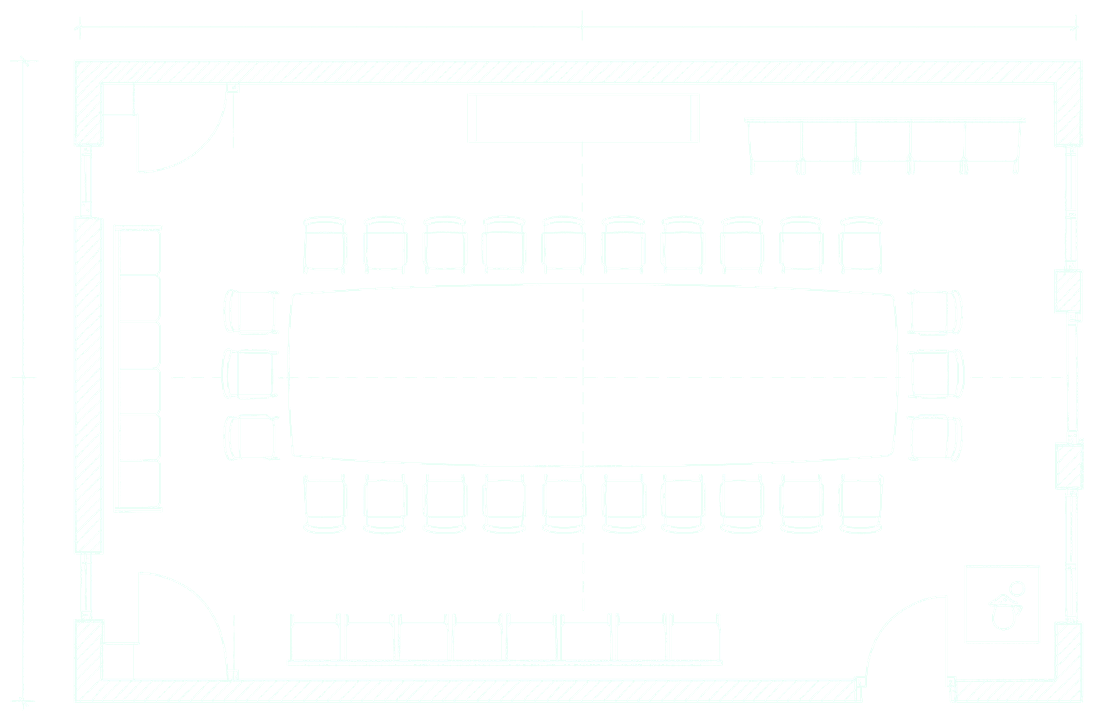
PL.03the boardroom, in plan

Today's marketing organizations were built around humans doing the work. The marketer writes the brief, pulls the report, analyzes the campaign, runs the research, builds the deck, reviews the creative, manages the agency. Job descriptions, workflows, incentives and management structures all assume that model.

An AI-native organization asks those same marketers to work differently. They still own the outcome, but increasingly they do not perform every step required to produce it. They decide what to delegate, teach agents how the business works, define what good looks like, review output and grant more autonomy as agents prove themselves.

The marketer moves from doing the work to directing and improving how the work gets done. That is a people transformation. It takes technical work to make it possible, and people working together to make it stick.

The hard part of going AI-native is the organization, not the technology.

The embedded team

The marketing teams seeing the most impact from AI do not expect their whole team to become technical, and they do not hire a whole new team. They bring on an embedded AI team whose job is to bring AI-native to the marketers, not the other way around.

In marketing, that means marketing engineers: engineers who know marketing. Marketing has made this move before. Nobody asked the brand lead to run the martech stack or build the attribution model. Marketing brought in martech and analytics specialists, and the marketers kept bringing the domain expertise.

The same division applies here. Marketers know the business, the work and what good looks like. Marketing engineers turn that knowledge into a working brain, skills, evals and agents. They build beside the marketers on real work, so learning to delegate, review and improve the system is part of getting the job done.

Companies at the frontier have shown how. Uber paired its most AI-proficient engineers with domain experts across finance, legal, operations and marketing, gave each pair two weeks to shadow the job and build an agent beside the person doing it, and ran sixteen of those pods in two months. One of them took marketing web QA from two weeks to fifty minutes. Its conclusion: the best opportunities are rarely visible from the outside. You find them by sitting next to the people doing the work, and building with them, not for them.

That is how the people change happens. A marketer learns a new way to analyze a campaign by building and using it with someone who can make it work. The engineer learns what the job actually requires from the person who owns the outcome.

Few marketing organizations can staff that team themselves. Uber had engineers to lend; most marketing teams do not. An embedded team can come from outside and bring experience across marketing organizations: what tends to break, what tends to work, and what the newest models make possible.

What the engagement leaves behind is the point. The brain, skills, evals and agents belong to the organization. Each workflow leaves its marketers able to run it, judge the output and improve it. The embedded team builds capability the company keeps.

Your marketers do not need to become marketing engineers. They need marketing engineers beside them.

An embedded team of marketing engineers builds AI workflows beside marketers, leaving the organization with capability it owns and marketers who can run it.

Three new jobs

With that team beside them, marketers take on new responsibilities. The engineers can build the system, but they cannot supply the company's knowledge or decide what great work looks like there.

The people already inside hold the scarce thing. They understand the customer and know the brand. They know which numbers to trust and which ones everyone quietly ignores. They remember what was tried, what failed and why.

So going AI-native does not mean replacing marketers, or making them technical. It means expanding what marketers are responsible for. As agents take on more of the execution, three new jobs appear inside the organization that already exists.

REQ · 01

Agent Hiring Manager

Owns

The roster. Which agents exist, what each one is responsible for, and which jobs stay with people.

Does

Writes the job before the agent — the context, skills and standards it needs to hold the role.

Grants

Autonomy job by job. Answer, then recommend, then act, and never before it is earned.

REQ · 02

Context Curator

Owns

What the organization knows. The brain, and whether it is still true this quarter.

Does

Gets knowledge out of heads, drives, meetings and chat histories, and into a form agents can use.

Ends

The arrangement where the marketer is the brain and reloads it by hand every morning.

REQ · 03

Factory Manager

Owns

The line. Throughput, quality, and where a human still stands between the work and the customer.

Does

Reviews and annotates. Diagnoses a failure once, then makes sure it cannot happen a second time.

Improves

The system that produces every deliverable, rather than the deliverable in front of them.

These are not three people to hire. They are three responsibilities marketers learn to take on with the embedded team beside them. Marketers already onboard new hires, write briefs and SOPs, teach junior people, delegate, review and give feedback. Those same abilities now manage machines as well as people. The engineers make the system work; the marketers learn to direct it.

Going AI-native does not mean replacing marketers or turning them into engineers. The marketers already inside the company hold the scarce thing: they know the customer, they know the brand, and they know which numbers to trust.

The transformation

No marketer changes how they work overnight, and no organization becomes AI-native all at once. The marketer and the embedded team start with one workflow, build it together and get it working before moving to the next.

Take campaign analysis. At first the marketer does the analysis and uses AI along the way: they attach the report, explain the campaign, paste in the historical context and tell the model which numbers to trust. The marketer is the brain.

The marketing engineer works beside them to get that knowledge into the company brain and give the agent access to it. The marketer identifies the campaign history, business context and metric definitions that matter, and checks that they are right. They stop having to explain the business from scratch every time.

Then they teach the agent how the work gets done. The marketer walks through an analysis: where they start, which inputs matter, what they compare, what they investigate when something looks wrong. The engineer turns that process into a skill, and they try it on real campaigns together. The work becomes a skill.

Then they make judgment explicit. What does an excellent analysis contain? Which conclusions require evidence? Which questions should the agent refuse to answer? What mistakes should never happen twice? The marketer supplies the standard; the engineer turns it into checks they can use to evaluate the work. Judgment becomes an eval.

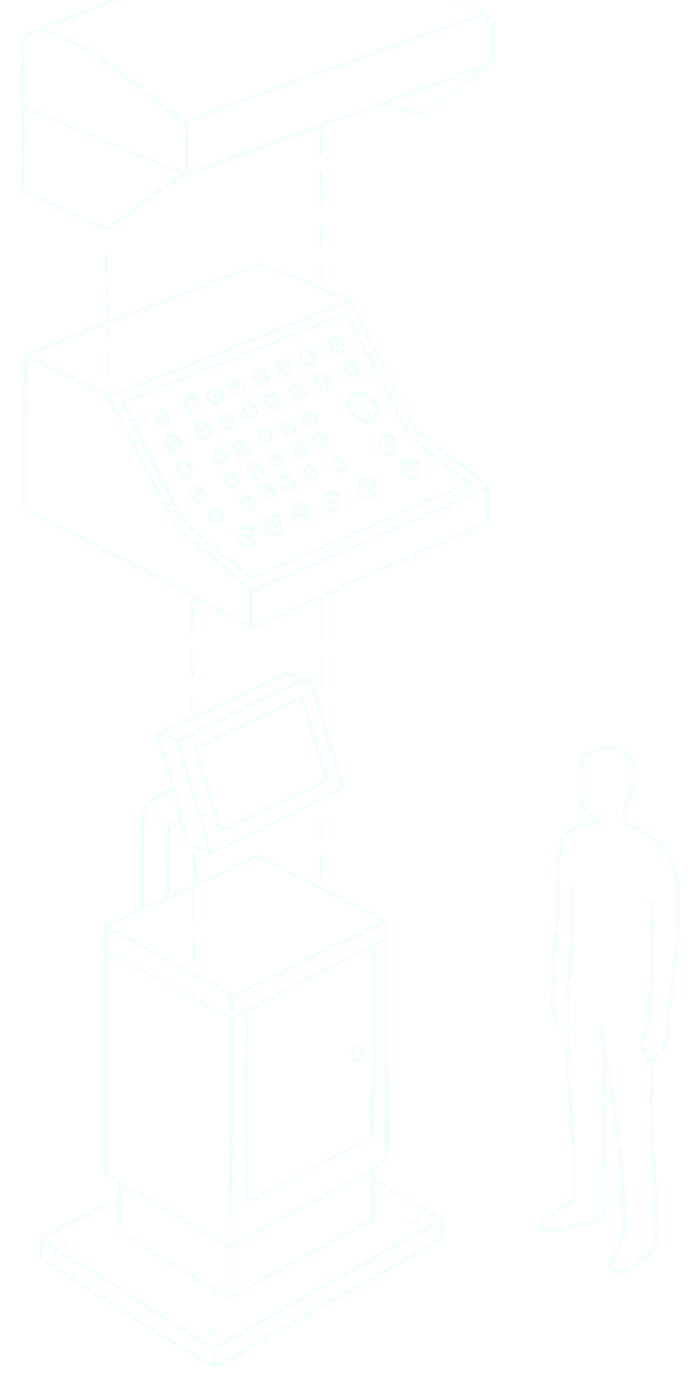
PL.04operator console, exploded

Now the agent can take on the analysis. The marketer reviews what comes back, and the engineer helps trace failures to missing knowledge, a bad process or a standard the agent did not meet. Together they correct the system and check that the correction worked. More responsibility follows evidence of reliability. Answer. Recommend. Act. Autonomy is earned job by job.

The workflow is working when the marketer can run it, judge the output and know what needs to improve. They have learned to use the brain and the evals through their own work. They still own the analysis, but they no longer have to assemble it every time.

Then they do it again. The next workflow might be creative analysis, competitive research, building a brief or preparing the weekly performance review. The embedded team builds beside the next marketer, using what the organization has already learned.

Some of the work required to get there is temporary. Recording a meeting because an agent cannot attend it yet. Writing out a skill a future model may infer on its own. Connecting tools that will eventually talk natively. That is fine. The wiring is temporary. What the organization learns about dividing work between people and machines is not.

Transform enough jobs and the marketer changes. Transform enough marketers and the organization changes.

A marketing organization goes AI-native one workflow at a time: marketers supply the knowledge and judgment, marketing engineers build beside them, and agents earn autonomy as their work proves reliable.

It compounds

Each workflow that changes makes the next one easier. What the agent needed to know about campaigns is still in the brain when the next agent needs it for creative analysis. The evals built for one analysis give the team a starting point for checking the next. The second workflow starts further along than the first, and the tenth further still.

The team learns the same way. With the marketing engineers beside them, marketers learn to add missing context to the company brain, make their standards explicit and use evals to check the work. A few workflows in, these are ordinary parts of doing the job.

The company gains a workflow it can run and a team that knows how to run it.

The embedded team keeps building and improving the machinery. The marketers keep its knowledge current, decide what good looks like, review what comes back and direct what happens next. A correction improves the shared system instead of disappearing with one deliverable.

And the transformation does not end. Better models can move more work to agents, reduce the supervision they need or remove a workaround. The embedded team tests those changes against the organization's work and standards, then helps marketers change the workflow when the evidence supports it.

The organization has two jobs: get AI-native, and stay there. Its marketers own the outcomes and the judgment. The embedded team helps them build, operate and improve the factory as AI changes.

An AI-native marketing organization is built one workflow at a time, and each one compounds: what the agent needed to know stays in the company brain, what good looks like stays in its evals, and the next workflow starts further along.

Part 04
04

That is why we built Bamboo

PL.05a stand of bamboo

Bamboo is that team. We embed marketing engineers in marketing organizations to build the factory with their marketers, one workflow at a time. Each workflow leaves the organization with capability it owns and marketers who can run it. We stay beside the team as the work and the technology change.

The team brings three things.

The system. A brain for what the organization knows. Skills for how work gets done. Evals for what good looks like. Tests for whether the system is improving. Agents with jobs, standards and increasing autonomy.

The playbook. A method for choosing where to start, building workflows with marketers, diagnosing failures and helping the team learn to direct and improve the system through its own work.

The frontier. We test what new models and capabilities change, learn across the factories we help build, and bring what works back to each one.

When the machinery improves, the factory should improve with it.

Our team helps get the first lines running, but the factory is built for the organization to operate. That means the machinery underneath it has to disappear into ordinary work.

No marketer should have to know what an eval is. But every marketer can say what an agent needs to get right, what it should refuse and what a good answer contains. Nobody should have to understand retrieval architecture, but every marketer has onboarded a new hire and knows what that person needed to learn. Nobody should have to specify a skill in a schema, but marketers write SOPs, train juniors and can explain how they do the thing. And nobody needs to be taught to run a test against a control.

The technical names are new. The work underneath them is not.

The same principle settles where the work happens. Keep Claude or ChatGPT, Slack, the project tracker, the analytics platform, the CRM, the SEO tools and the ad platforms. Bamboo sits underneath them: supplying what agents need to know, encoding how work gets done, evaluating what comes back and preserving what the organization learns.

The factory should feel like work, not AI infrastructure.

And it should belong to the organization. Models will change. Tools will change. The machinery underneath Bamboo will change too. The organization's knowledge, skills, standards, agents and accumulated learning should not disappear with them.

The marketers own the transformation. Bamboo's marketing engineers bring the system, the playbook and the frontier to carry it out.

The factory belongs to the organization.

Coda

A different kind of marketing organization

The result is not a marketing department with fewer people doing the same amount of work. It is a different kind of organization. One where humans spend less time assembling and more time judging. Where the organization's best knowledge does not live in a handful of people's heads. Where learning compounds instead of disappearing into meetings and chat windows. Where new capability does not always require another hire, and an agent that gets better makes everyone who uses it better. Where the organization owns the intelligence it creates, and humans and agents together do work that neither could do alone.

For decades, marketing organizations scaled by accumulating people, and more people created more capability alongside more management, more coordination, more handoffs and more bureaucracy. AI breaks that relationship. The AI-native marketing organization accumulates knowledge, judgment, skills and agents instead. Capability can compound without bureaucracy compounding alongside it.

The old organization asks when AI will finally be good enough to fit the way it already works. The AI-native organization asks how it should work now that AI exists. Everything follows from which question a team decides to answer.

The goal is bigger than putting more AI into marketing. It is to build a marketing organization that can become more capable, produce more, and perform better without having to become more bureaucratic to do it.

For the first time, we can.

TitleThe AI-Native Marketing Organization
ScaleNTS
Sheet1 / 1
IssuedBamboo
PlatesPL.00 – PL.05
RevA
Date2026